
Cash Flow Statement: How much did actual cash increase during the rent period?
Quick Links
What can the Cash Flow Statement do for you?
The Cash Flow Statement answers what the Income Statement can't: How much did cash actually increase or decrease over the period? It starts with the beginning cash balance, lists net cash changes, and aligns with the ending cash balance, showing actual cash flow.
Why doesn't net profit equal cash? In property rentals, profits often decouple from cash: rent is due but unpaid; you have profit, but no cash. Deposits received mean cash flow, but not profit. The income statement tells you your earnings, while the cash flow statement shows cash on hand. Viewing both gives a complete picture.
How to Operate
Step 1: Set Report Conditions
Go to the report page in the features list (click Reports on the left menu, then select Report) and set the following conditions in order:
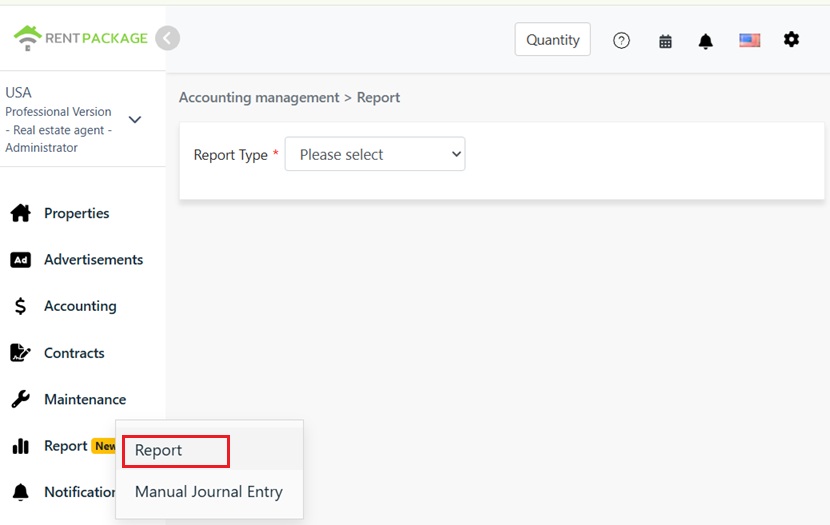
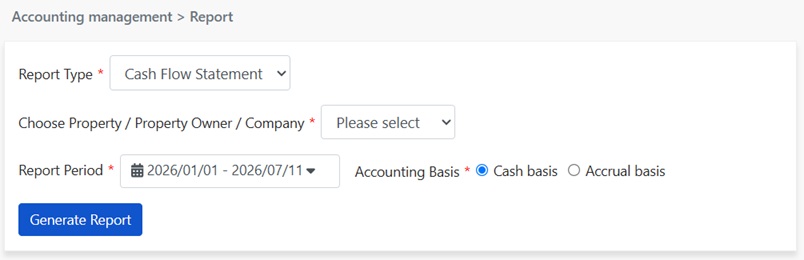
- Report Type: Select Cash Flow Statement.
- Select Property/Owner/Company: Determine the scope of the report: a single property, all properties under an owner, or the entire company.
- Report Period: Choose start and end dates freely. Beginning cash balance is taken from the start date status, end cash balance from the end date status.
- Accounting Basis: Choose between the Cash Basis (recorded on receipt date) or Accrual Basis (recorded on due date). The basic choice affects current period net income and adjustment components. See FAQ.
Step 2: Generate Report
Click to generate the report. The system will produce the cash flow statement. Read top-down, it traces the path from profit to cash:
- Operating Activities: Start with current period net income (same as on the income statement), plus adjustments (changes in working capital). Adjustments address profit-to-cash discrepancies, like accrued but not received rent, changes in deposits and advances.
- Net Cash Flow for the Period: After adjustments, derive the actual cash increase or decrease for the period.
- Opening and Closing Cash Balance: Opening cash balance plus net cash flow of the period equals ending cash balance. The closing balance should match your account's actual state at period end, serving as a direct reconciliation method.
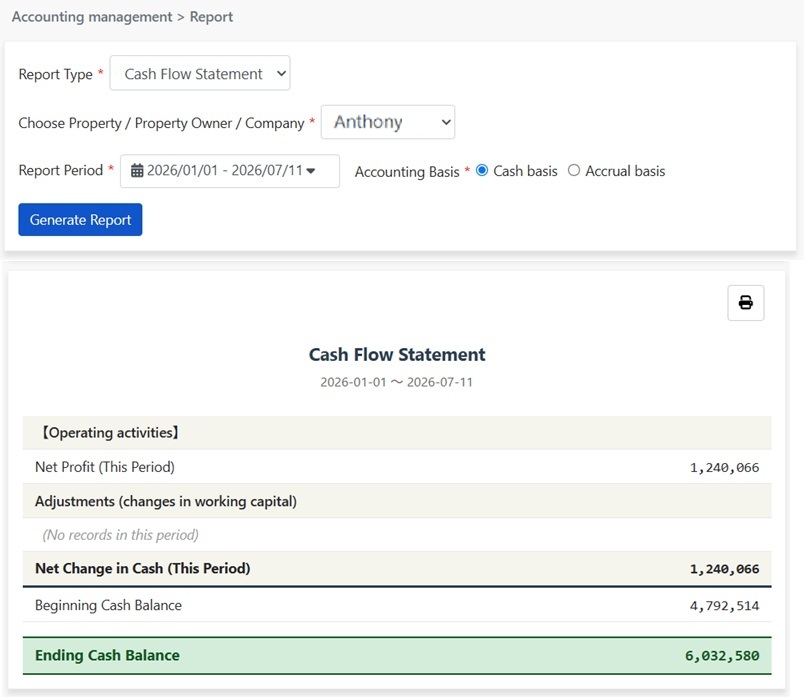
Click the print icon at the top right of the report to print directly or save as PDF for accountants or owners to keep.
FAQ
Why is this period's net income different from the cash net change?
Because earned money isn't always received, and received money isn't always earned. Rent due but unpaid: income recorded, but no cash. Security deposits or prepayment received: cash in, but a liability, not income. Such differences are adjusted via operating capital changes, so net income plus adjustments equals actual cash change.
What is the difference between the income statement and the cash flow statement?
The income statement shows how much was earned: period income minus expenses. The cash flow statement shows how much cash was received: actual cash change and reasons from start to end of the period. Over time, both align in a healthy property, but may vary greatly in a single period. For example, a high rent delinquency month looks good on the income statement but poor on the cash flow statement, highlighting the need to view both.
What does 'no records for adjustments this period' mean?
It indicates no events caused a disconnect between profit and cash, like no new or collected receivables, unchanged deposits, or prepayments. In this case, net cash change equals net income for the period.